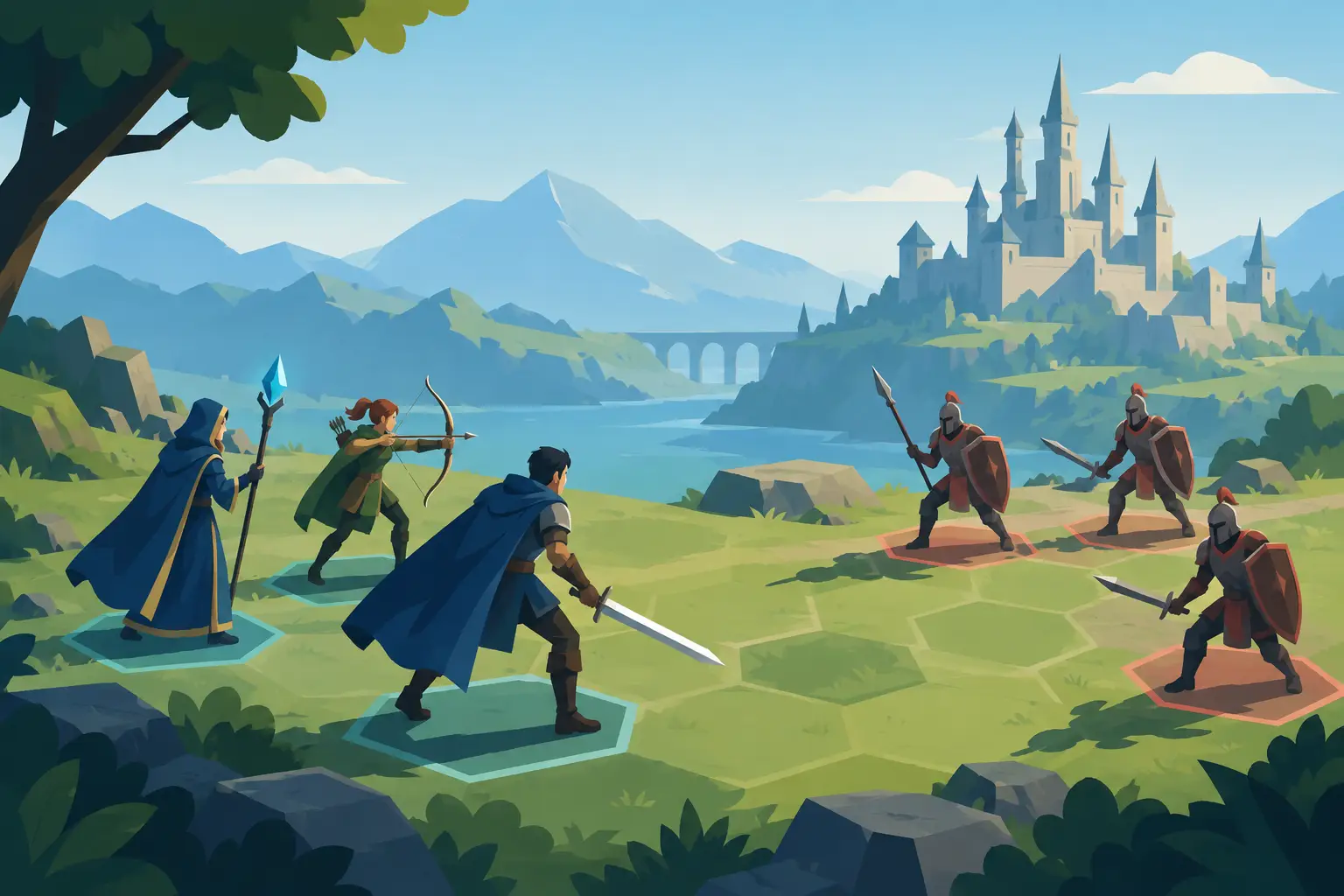
A strong turn-based strategy rpg does not ask whether your heroes can hit hard enough. It asks what you are willing to sacrifice before the enemy takes its next turn. A healer may keep the formation alive, but leave your damage too low to stop a ritual. A swift assassin may remove a dangerous target, but expose the back line to retaliation. Those decisions are where numbers become tension.
For mobile RPG players, that tension has to survive a smaller screen, shorter play sessions, and the steady pull of long-term collection. The best games do not bury strategy beneath endless menus or reduce it to raw power. They give every Warlord, Familiar, skill, and position a purpose in the coming battle.
Why a Turn-Based Strategy RPG Feels Different
Turn-based combat creates a visible chain of cause and effect. You see an enemy preparing a strike, identify the threat, and decide whether to interrupt it, endure it, or defeat the source before the action lands. The pace gives players room to read the field, but it also makes errors harder to hide. A wasted turn is not just an animation. It is an opening for the enemy.
That structure makes information valuable. Turn order, cooldowns, status effects, defensive layers, elemental or faction relationships, and positioning all become parts of the same puzzle. A player who understands those systems can defeat an opponent with greater raw strength. Not every encounter should allow that outcome, but enough should. Otherwise, strategy becomes decoration around a power check.
The role-playing side gives those choices weight beyond a single match. You are not moving anonymous units across a board. You are investing in characters with identities, skills, equipment, and histories. When a Familiar survives because its Blood Bond unlocked the exact ability your formation needed, progression feels personal rather than automatic.
Strategy Begins Before the First Turn
The deepest decision in a strategy RPG often happens before combat begins. Team construction determines which answers you bring into the fight, while formation determines who can use them safely.
A balanced team may include durability, recovery, control, and damage. That is reliable, but reliability can be slow. A more aggressive formation may aim to destroy an enemy threat before it acts, accepting that a failed opening leaves little room for recovery. Neither approach is always correct. The enemy roster, battle rules, and available resources should decide the answer.
Positioning turns that choice into something concrete. Front-line defenders may absorb pressure and protect fragile attackers. Back-line casters may control the pace of battle, but become a liability against enemies that bypass the front. A unit with powerful area damage might belong where it can act early, while a support Familiar may be more valuable when shielded long enough to cast twice.
This is why formations should not be treated as a cosmetic arrangement. They are a contract between your team and the battlefield. Put the wrong character in the wrong place, and even a rare, highly evolved unit can become dead weight.
The Value of Clear Roles
A character does not need to be perfect at everything. In fact, focused roles make team-building more interesting. A guardian that protects allies, a debuffer that weakens armor, a controller that delays actions, and an executioner that punishes low-health enemies can create a deadly sequence together.
The trade-off is dependence. A specialist shines when the rest of the formation supports its job. If the controller falls too early or the debuffer cannot land an effect, the executioner may lose its moment. That vulnerability is healthy when players can recognize it and adjust. It becomes frustrating when outcomes are impossible to read.
Status Effects Are the Language of Control
Damage ends battles, but status effects decide who gets to play. Stuns, silences, blinds, shields, damage-over-time effects, taunts, buffs, and debuffs all change the value of a turn. A well-timed control effect can stop a devastating skill. A defense reduction can transform modest damage into a finishing blow. A shield can buy one crucial round for a healer or summoner.
The strongest systems make these effects clear and give them limits. If control lands every turn with no answer, battles become helpless. If every enemy is immune to everything, the system might as well not exist. Resistance, cleansing, cooldowns, diminishing returns, and target restrictions can create room for counterplay without stripping effects of their power.
Players should also consider timing. Applying a debuff after the team has already used its strongest attacks may be technically useful, but tactically poor. Holding a cleanse until corruption spreads through the formation can be equally costly. The question is rarely, "Is this ability good?" It is, "Is this the turn when it matters most?"
Progression Should Expand Options, Not Erase Them
Hero collectors live on the thrill of acquisition. A new Familiar can change how a team looks, how it functions, and what battles it can challenge. Yet collection only becomes lasting strategy when new additions create choices instead of making old allies irrelevant overnight.
Leveling, evolution, equipment, empowerment, and skill unlocks should give players a sense of growth. At the same time, growth needs friction. If every upgrade is obvious, progression becomes a checklist. If every upgrade requires rare materials with no meaningful gain, it becomes a wall.
The most satisfying progression systems ask players to choose a direction. Do you invest in one powerful raid specialist, or raise a broader roster for events and multiplayer? Do you improve a tank's survival, or strengthen a damage dealer to end battles sooner? Do you spend scarce resources on a favorite Familiar now, or save them for a future summon?
There is no universal answer. A player focused on raid battles may value sustained damage and survival. A player climbing competitive rankings may need faster openings, disruption, and flexible counters. Long-term progression works when both paths feel viable, even if neither is easy.
Automated Combat Can Still Reward Tactical Thought
Not every strategic RPG requires players to select every action by hand. Automated combat changes where the decision lives. Instead of choosing each move during battle, the player builds the conditions that determine the outcome: formation, team composition, stats, skills, equipment, buffs, debuffs, and target priorities where available.
That approach works best when battles remain readable. Players need to understand why a formation succeeded, why it collapsed, and which change may alter the result next time. If an enemy destroys the back line, the answer might be stronger protection, a different position, more control, or a faster offensive opening. If the result is simply unexplained randomness, there is little strategy to refine.
Blood Legends RPG is built around this preparation-driven form of combat. As a Warlord, you form Contracts with Familiars, develop their strength, and shape formations before they enter a world scarred by corruption and ancient Gates. The battle may unfold automatically, but the decisions that lead to it belong to the player.
That distinction matters for mobile play. Automated resolution can respect a player's time, especially during resource stages or repeat battles. High-stakes encounters should still demand attention through roster planning, enemy knowledge, and careful adjustments. Convenience should remove repetition, not remove thought.
The Best Battles Tell a Small Story
A memorable encounter has a turning point. Perhaps a damaged defender survives with a sliver of health, allowing a support skill to restore the formation. Perhaps an enemy commander is nearly defeated, then raises a barrier and forces a new plan. Perhaps a captured Familiar becomes the missing piece that lets a Warlord overcome a previously impossible stage.
These moments do not require pages of dialogue. They come from mechanics that support the world. In a dark fantasy setting shaped by crumbling civilizations, war, and spreading corruption, enemies should feel dangerous for more than their health totals. Their abilities can suggest disease, desperation, ritual, hunger, or the influence of something beyond the Gates.
That connection between mechanics and atmosphere is what gives a strategy RPG staying power. The player is not merely clearing another stage. They are learning how to survive a hostile world and gathering the allies required to face what it is becoming.
A lasting strategy RPG keeps placing one hard question in front of the player: what will your formation become when the next threat arrives? The answer should never be found in a single unit, a single upgrade, or a single victory. It is built slowly, Familiar by Familiar, through every risk you choose to take.