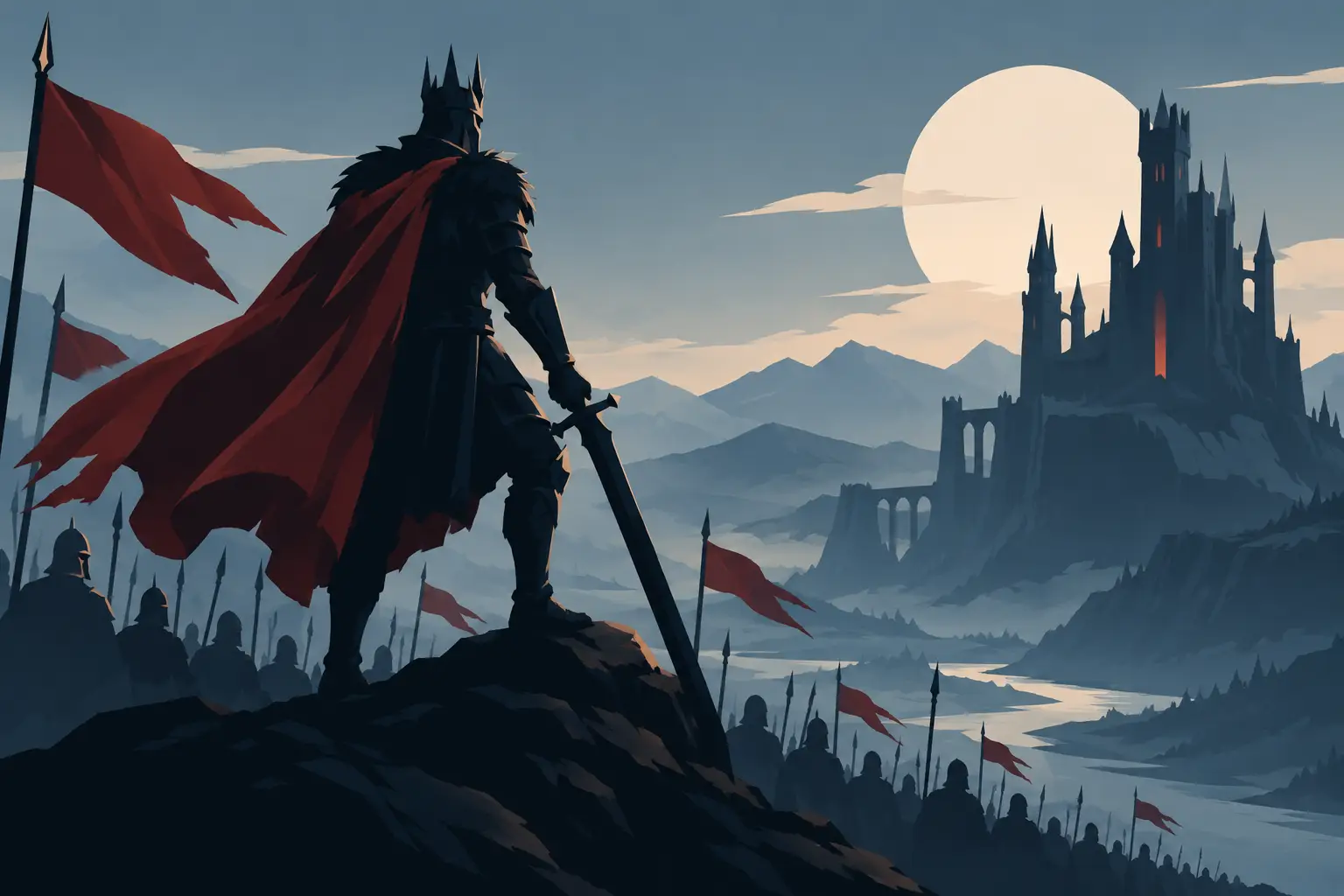
A battle can be lost before the first skill is cast. In this Warlord combat review, that is the central truth: Blood Legends is built around automated encounters, but the Warlord who wins is rarely the one who simply raised the largest numbers. Formation, Familiar choice, equipment, skill access, and the pressure created by buffs and debuffs all determine what happens once combat begins.
That makes every victory feel earned in a different way. You do not command each attack second by second. You shape the force that enters the field, then watch the consequences of your decisions unfold against corruption, rival Warlords, and the threats gathering around the ancient Gates.
Warlord Combat Review: Automation With Consequences
Automated combat can mean two very different things in a mobile RPG. In the weaker version, the system plays itself and player choice fades into the background. In Blood Legends, automation is the resolution phase. The meaningful decisions happen before the clash, through the team you build and the roles you assign across the formation.
Your permanent Warlord is not a disposable unit drawn from a summon pool. Each Warlord becomes the center of a longer campaign, a leader whose identity influences how a player approaches the roster around them. With eight Warlords to choose from, the opening choice carries weight without making the rest of the collection irrelevant. Familiars provide the depth, variation, and difficult choices needed to turn that leader into a functioning warband.
The result is combat that rewards attention between fights. A formation that survives a story encounter may fail against a raid target designed to punish one damage type, expose a weak frontline, or outlast a burst-focused squad. The game asks a useful question: is your team powerful, or is it prepared for this enemy?
The Formation Is the First Battlefield
Positioning is more than presentation. The places occupied by your durable defenders, fragile damage dealers, and support-focused Familiars define who absorbs pressure and who is protected long enough to execute a plan. A careless arrangement can turn a strong roster into a short battle for the wrong side.
A front position may suit a Familiar built to endure attacks, apply control, or punish enemies that engage too closely. A more vulnerable unit may belong farther from danger, where its damage, healing, or disruption can matter over several turns. There is no permanent universal setup because enemy behavior, skill targets, and battle objectives can change the value of every slot.
This is where combat becomes more strategic than a simple power-score comparison. If an opponent breaks through the front line too quickly, adding more raw damage may not solve the problem. A tougher anchor, a better defensive buff, or a formation adjustment may create the time needed for the rest of the team to work. If the enemy survives too long, the answer may be stronger sustained damage, a debuff that weakens defenses, or a different Familiar whose skills fit the encounter.
The best formations are not merely collections of rare units. They are agreements between units. One holds, one wounds, one disrupts, and one capitalizes.
Stats matter, but timing changes their value
Stats remain essential. Leveling, evolution, empowerment, equipment, and other progression systems build the baseline required to face stronger content. A severely underleveled team will not become unstoppable just because it is arranged intelligently.
But stats have context. Survivability matters most when it lets a key Familiar act again. Speed and offensive pressure matter more when an enemy healer or dangerous damage dealer must be removed before its skills reshape the battle. A bonus that seems modest in the menu can become decisive when it supports the rhythm of the whole formation.
That tension is a strength. Players who enjoy long-term progression have clear reasons to invest in their collection, while players who enjoy tactical adjustments still have room to outthink an encounter rather than endlessly repeating it.
Familiars Turn a Roster Into a Strategy
Familiars are not just combat pieces. They are the heart of collection, growth, and experimentation. Capturing enemies, summoning new Familiars, improving their levels, evolving them, and strengthening their attributes creates a roster that expands over time instead of remaining fixed around an initial team.
The important question is not simply, “Who is strongest?” It is, “Who strengthens this Warlord and this formation?” A Familiar with a valuable effect may be more useful than a higher-stat alternative when it fills a missing role. That could mean protecting a vulnerable ally, applying a debilitating effect, supporting a drawn-out fight, or supplying the damage needed to finish a priority target.
Blood Bond adds another layer to that relationship by allowing skills to be unlocked through progression. This gives development a sense of purpose beyond a rising number. As a Familiar changes, its place in your strategy can change with it. A unit that once served as a temporary option may become central after gaining an ability that completes a formation.
There is a trade-off, and it is a good one. Investing deeply in a small core team can make immediate progress smoother, while spreading resources across several Familiars creates answers for future encounters. The right choice depends on what stands ahead: a difficult story stage, a raid battle, a competitive opponent, or an event with unusual rules.
Buffs, Debuffs, and the War Beneath the Damage Numbers
The most satisfying automated battles are rarely decided by damage alone. Buffs and debuffs create the hidden war beneath every visible hit. Protection, control, weakening effects, and other skill interactions can alter an encounter so completely that a team with lower apparent power becomes the more dangerous force.
This is also why losses should be read, not dismissed. When a formation falls, look beyond the defeat screen. Did the frontline collapse before support effects mattered? Did the enemy’s defenses make your damage ineffective? Did a critical Familiar get targeted too early? Was the battle close enough that a small equipment improvement could have changed it, or does the entire team need a different approach?
That habit separates progression from repetition. Automated combat becomes frustrating when there is no readable reason for failure. It becomes compelling when defeat leaves evidence. Blood Legends gives players multiple levers to pull: formation placement, Familiar selection, skill progression, gear, and the larger direction of their collection.
Where Combat Changes From Mode to Mode
Story-driven locations, events, raids, and real-time multiplayer should not demand the same team from every player. The campaign can reward a stable, broadly capable formation that survives a range of threats. Raid battles may place greater value on sustained output, survival, and coordination against a single overwhelming enemy. Competitive play can reward adaptability, counterbuilding, and a deeper understanding of what opposing formations want to accomplish.
Real-time multiplayer especially changes the feeling of preparation. An enemy controlled by another player brings uncertainty. You are not only measuring your team against a fixed encounter but against someone else’s collection decisions, upgrades, and tactical habits. A familiar formation may be powerful until opponents begin planning around it.
Live events add another reason to keep building instead of settling into one finished squad. New challenges can make overlooked Familiars relevant, encourage different combinations, and give value to a more flexible collection. The Bazaar, where eligible Familiars can be traded, further supports that living roster economy without erasing the value of the work players put into their teams.
Is This Combat for You?
This combat system suits players who enjoy preparation, roster management, and the slow satisfaction of seeing a revised formation solve a problem that brute force could not. It also suits collectors who want the characters they acquire to have meaningful places in battle rather than existing only as trophies.
Players seeking constant manual input may need to adjust expectations. The action is not about tapping at the perfect instant. It is about making choices that remain meaningful after the battle begins. Watching a carefully built team execute its plan is the reward, especially when a hard encounter finally breaks after you identify the weak link.
Approach each loss like a message carried from the battlefield. Strengthen what held, replace what failed, and let your Warlord return to the Gates with a formation the enemy has not yet learned to fear.