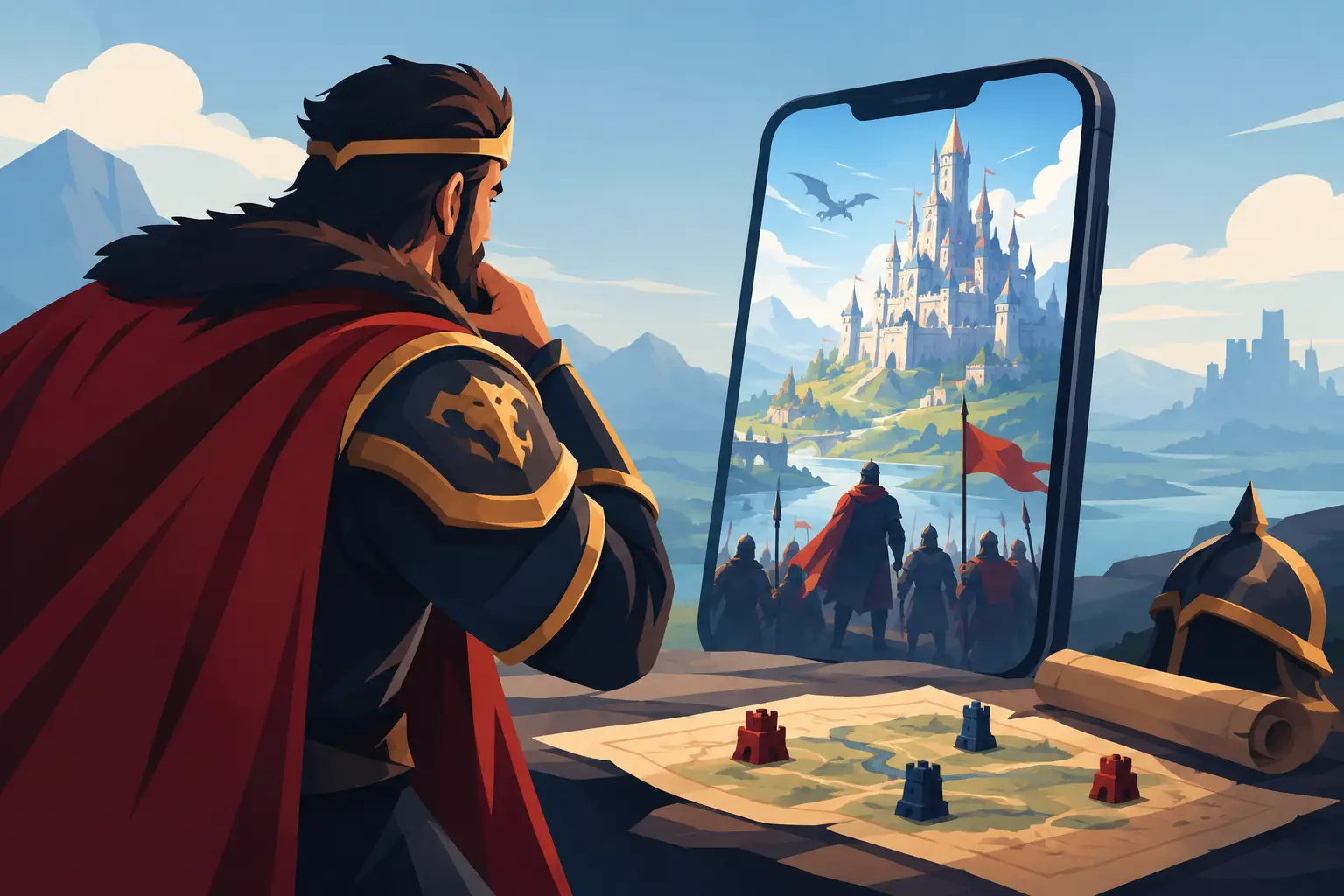
A worthy upcoming mobile RPG 2026 will not win attention simply by showing a beautiful summon screen or promising hundreds of heroes. Mobile players have seen that ritual before. What endures is the feeling that every Familiar claimed, every formation adjusted, and every enemy defeated has moved a campaign forward through a world with something to lose.
The strongest games arriving in 2026 will understand a difficult truth: collecting is only satisfying when ownership creates decisions. A character cannot merely fill a slot in a gallery. They need a place in battle, a connection to the world, and a future worth investing in. For players who answer the call of dark fantasy, the question is not how many new RPGs will appear. It is which ones will make the daily return feel like a Contract renewed under gathering shadows.
Upcoming Mobile RPG 2026 Needs More Than a Roster
A large roster remains one of mobile RPGs' greatest promises. New allies offer fresh tactics, striking art, and the rare thrill of finding the final piece of a team. But size without purpose becomes noise. When every recruit performs nearly the same role, a collection loses its power long before a player reaches the endgame.
In 2026, meaningful collection should begin with identity. A Familiar's skills, affinity, status effects, and battlefield role should create real tension during team building. One may keep a fragile formation alive through shields or recovery. Another may weaken a raid boss just long enough for a damage-focused squad to break through. A third may be valuable not because their numbers are highest, but because their timing changes how an entire encounter unfolds.
That does not mean every character must be equally powerful in every mode. They should not be. A specialist designed for extended boss battles may struggle in fast player-versus-player fights, while a disruptive arena unit may have little value against a creature that ignores control effects. Those limits give players reasons to experiment rather than chase a single permanent answer.
Long-term growth matters as much as the initial summon. Levels, evolution, equipment, empowered stats, and skill progression should feel connected rather than like separate chores placed in different menus. The best progression systems give a player a visible choice: strengthen a trusted ally now, or save scarce resources for the unknown threat waiting beyond the next Gate.
Strategy Must Survive Automated Combat
Automated combat is often misunderstood by players who equate control with tapping every ability at the perfect second. On mobile, automation can serve strategy well, provided the important decisions happen before battle begins. The fight becomes a judgment on preparation, not an excuse to remove it.
Formation placement should matter. Front-line defenders need to absorb pressure; vulnerable damage dealers need protection; support units need positions that let their buffs and debuffs affect the right allies at the right time. Team composition, gear choices, skill synergies, and enemy knowledge should determine whether an automatic battle feels inevitable or tense.
The difference is clarity. If a formation fails, players need enough information to understand why. Perhaps the back line was exposed too early. Perhaps the squad lacked resistance to a particular debuff. Perhaps a powerful Familiar was built for burst damage while the encounter required survival. Losses can be punishing, but they should not feel unreadable.
This is where dark fantasy has an advantage. A battle against corrupted creatures should not feel interchangeable with a duel against rival Warlords or a raid against something that stepped through an ancient Gate. Enemy behavior, visual direction, and encounter rules can make tactical choices feel tied to the threat itself. The battlefield becomes part of the story, not a flat stage between reward screens.
A World Worth Returning To
The next generation of mobile RPGs will be judged by their daily loops, but remembered by their worlds. Players can forgive a slow climb if they feel they are moving through places scarred by history: abandoned strongholds, cities held together by fear, sanctuaries where loyalty has a cost, and lands where corruption keeps spreading.
Dark fantasy works best when it resists explaining everything at once. Let the player learn about a fallen civilization through a ruined district, a damaged relic, or the words of a Familiar whose past is not entirely trustworthy. Let the Gates remain dangerous because no one fully understands what has crossed them. Mystery creates room for a live world to grow.
Story is also stronger when progress changes its emotional weight. A new location should not exist only to deliver larger numbers and tougher enemies. It should reveal a consequence. An ally may become compromised. A faction may demand a sacrifice. A victory may close one path while opening another. These moments do not need pages of exposition. A few well-placed scenes can make a campaign feel personal.
Blood Legends RPG is built around that pressure: Warlords gather Familiars and establish their formations while corruption, war, and the ancient Gates pull the world toward catastrophe. The goal is not to bury players in lore. It is to let that threat surface through exploration, battles, characters, and the decisions made over many sessions.
Fair Progression Has a Longer Shadow
For every exciting new release, players will ask a practical question: how much time, patience, or money will it take to build a team they enjoy? That question should never be treated as an inconvenience. It decides whether a promising launch becomes a lasting community.
A satisfying mobile RPG can offer premium summons and still respect its players. The key is dependable progress outside of luck. Campaign rewards, events, challenges, strategic resource use, and steady account growth give players a path even when the rarest pull does not arrive. Randomness adds anticipation; it should not erase agency.
There is a trade-off. If every top-tier character is obtained instantly, collection milestones lose their weight. If growth is too slow or too restricted, players stop seeing a future for the squad they already have. The healthier middle ground gives rare rewards their drama while ensuring commitment is recognized over time.
Trading can deepen that balance when handled carefully. A Bazaar for eligible Familiars can turn duplicates and unwanted finds into opportunities, while clear restrictions protect progression and reduce abuse. It also creates a social layer beyond combat. The player who finds a creature they do not need may hold the missing piece of another Warlord's formation.
Multiplayer Should Test Preparation, Not Wallet Size
Competitive modes are where an upcoming mobile RPG earns trust or burns it. Real-time multiplayer can be thrilling because another player's formation is less predictable than scripted enemies. Yet it must reward adaptation, matchup knowledge, and roster depth more than raw spending.
Healthy competition needs tiers, readable matchmaking, useful defensive records, and rewards that recognize participation as well as dominance. Newer players need room to learn without becoming fuel for veterans. Established players need reasons to adjust tactics rather than repeat the same formation forever.
Raid battles offer a different kind of pressure. They can make a community feel united against an enemy too large for any one squad to erase. The best raids ask players to consider timing, debuff uptime, survival, and coordinated team roles. A damage leaderboard can be motivating, but shared milestones make the threat feel communal rather than solitary.
Events should follow the same principle. They should introduce a reason to play differently, not merely add another reward track with a different background. A limited encounter that favors a neglected class, a corruption mechanic that changes formation priorities, or a story event with an unusual boss can refresh a familiar routine without making it feel like work.
What Players Should Watch Before Committing
Trailers can reveal atmosphere, art direction, and ambition. They cannot show whether a game respects time, communicates clearly, or has enough tactical depth to survive the first month. Before choosing a new campaign, look past the cinematic moment.
Watch for evidence that collection connects to gameplay, that defeats can be understood and answered, and that the game has a clear plan for events, raids, story updates, and competitive balance. Development plans can change, especially for live-service games. Honest communication about what is playable now and what is still being built is far more valuable than promises spoken too early.
The mobile RPGs that matter in 2026 will not ask players to believe in a world and then leave them standing outside its gates. They will give every Warlord a reason to return: one more Familiar to strengthen, one more formation to test, and one more shadow on the horizon that cannot be ignored.