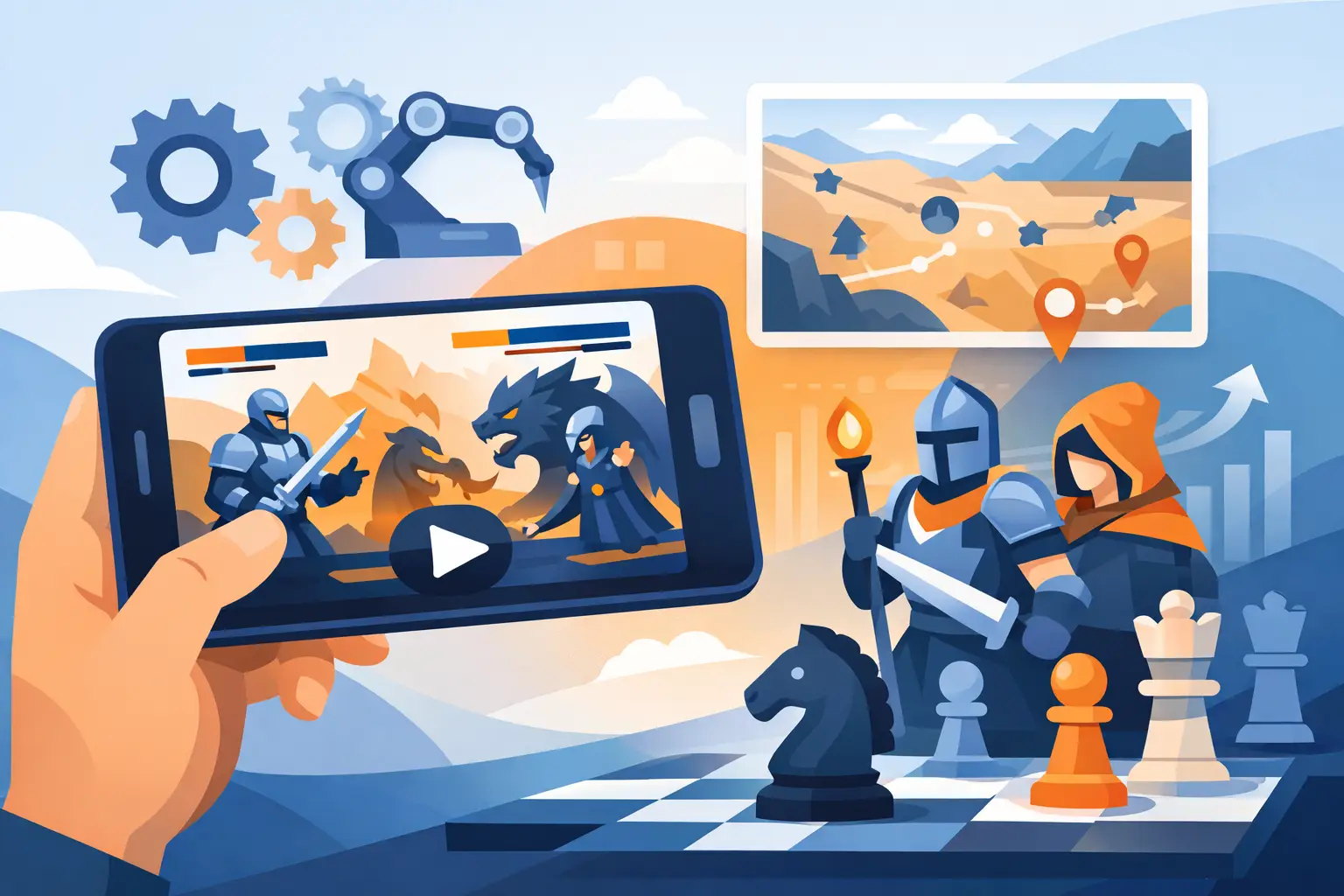
The front line breaks before the first skill is cast. A poorly placed defender falls, a healer is silenced, and the damage dealers behind them become easy prey. That is the real appeal of a mobile RPG with automated combat: the battle may run on its own, but the outcome begins with every choice made before the enemy is engaged.
Automated combat is often mistaken for passive combat. It is not. In a strong hero-collector RPG, auto-battle removes the burden of tapping the same commands hundreds of times. It leaves the meaningful decisions intact: who fights, where they stand, which strengths are amplified, and which weaknesses can bring the whole formation down.
For players drawn to dark fantasy, collection, and long-term growth, that distinction matters. A Warlord does not survive a world of corruption, ancient Gates, and collapsing kingdoms by pressing faster. They survive by preparing for what waits beyond the next ruined road.
What a Mobile RPG With Automated Combat Does Well
The best automated combat systems respect a player’s time without flattening the RPG beneath them. Battles resolve quickly enough for a commute, a short break, or a late-night check-in, while team building remains deep enough to reward patience.
Instead of asking players to repeat the same attack pattern, automated combat shifts attention toward preparation. Character levels, equipment, skill effects, faction or role synergies, formation positions, buffs, debuffs, and team composition become the language of battle. A victory is not simply a number rising on the screen. It is evidence that a plan held together under pressure.
That makes the system especially suited to mobile play. A difficult stage can be attempted, studied, adjusted, and attempted again without turning every fight into a long manual routine. Players can keep progressing through story locations and resource battles while saving their closest attention for the decisions that shape their roster.
There is a trade-off. Players who want direct control over every spell cast may prefer action RPGs or turn-based games with manual commands. Automated combat asks for a different kind of ownership. You are the architect of the fight, not the hand gripping every blade.
Formation Is Where the Battle Begins
Positioning gives automated combat its teeth. The same Familiar can feel ordinary in one formation and decisive in another. A durable guardian placed in front may absorb the opening assault. A fragile attacker protected in the rear may have time to build momentum. A support unit placed carelessly can be removed before its healing, shielding, or control effects change the battle.
This creates a useful tension: a team with the highest raw power is not always the team that wins. A balanced formation can overcome stronger opponents when it prevents the enemy from reaching vulnerable targets, resists a dangerous damage type, or disrupts a key ability at the right moment.
Before changing a dozen characters after a loss, inspect how the defeat happened. Did the front line disappear too quickly? Did one enemy attacker erase the back row? Did a debuff spread through the team unchecked? A clear answer leads to a useful adjustment. Random upgrades often lead only to a stronger version of the same mistake.
Build Around Roles, Not Just Rarity
A rare Familiar may have enormous potential, but potential only matters when the rest of the team supports it. Some units need protection before they can deliver their best damage. Others become stronger when allies apply status effects. A healer may be invaluable in a long raid battle yet less useful in a fast encounter where immediate control or burst damage decides the result.
Think in roles first: front-line protection, sustained damage, burst damage, healing, control, and support. Then look for relationships between them. The goal is not to force every role into every team. The goal is to understand what your team is trying to do and what it sacrifices to do it.
A defensive formation may outlast a boss but struggle against timed objectives. A high-damage squad may clear routine stages quickly but collapse in multiplayer when opponents can disrupt its opening sequence. Keeping more than one prepared team creates options when the world changes around you.
Progression Turns Collection Into Power
Collection alone is not strategy. The strategic value comes from deciding where to invest. Leveling, evolving, empowering stats, improving equipment, and developing skills can turn a newly captured Familiar into a central piece of a formation. Yet resources are rarely endless, especially early in a campaign.
A sensible approach is to deepen a core team before spreading resources across every new recruit. That core gives stability in story progression, raids, and events. Once it can carry difficult content, expanding the roster becomes less risky and more rewarding.
Still, do not treat every non-core Familiar as disposable. A character that seems weak in a general team may become essential against a specific boss, enemy formation, or event rule. Automated combat rewards a broad collection because it rewards adaptation. The enemy will not always fail in the same way.
In Blood Legends, Warlords form Contracts with Familiars and shape them into formations built for conflict. Capturing enemies, summoning new allies, evolving them, strengthening their equipment, and developing abilities through Blood Bond give each roster a history. The right Familiar is not always the newest one. Sometimes it is the survivor you invested in before the Gates began to stir.
Know When to Push and When to Prepare
A stalled stage is not always a sign that the game expects more grinding. It may be asking for a counter. If a boss punishes slow teams, bring more pressure. If an enemy formation relies on one dangerous attacker, shift protection toward the target it hunts or use control that interrupts its rhythm.
When upgrades are the answer, focus on the improvement with the clearest purpose. Strengthening a front-line unit can create enough time for the entire team to function. Improving a healer can change a war of attrition. Upgrading a key damage dealer may shorten a battle before incoming pressure becomes fatal.
Progression feels better when it answers a problem. Power gained with intent is more satisfying than power gained only because a menu showed a red notification.
Automated Combat Can Strengthen Competition
Multiplayer becomes more interesting when both players bring prepared formations rather than reflex speed alone. The contest shifts toward roster knowledge, counterplay, and anticipating what opponents value. A popular aggressive setup will eventually invite teams designed to survive its first assault. A defensive wall will eventually meet opponents built to wear it down.
Real-time multiplayer can add pressure to that equation. Even where combat resolves automatically, the preparation is personal. Your formation reveals your priorities, and your opponent’s formation demands a response. The strongest players are rarely those who copy a single team forever. They are the ones who understand why a team works, where it breaks, and when the battlefield has changed.
Raids and live events create another reason to keep experimenting. A raid boss may reward sustained damage and survival. An event may favor a different set of roles than the campaign. These modes prevent one formation from becoming the only answer and give overlooked Familiars a chance to matter.
Let the Battle Teach You Something
Auto-battle is most rewarding when players resist the urge to treat a loss as bad luck. Watch the opening seconds. Notice which Familiar falls first, which skill changes the fight, and whether the formation actually performs the role you assigned to it.
Then make one deliberate change. Move a defender. Replace a fragile attacker. Improve equipment on the unit carrying the team. Try a different Familiar whose abilities answer the threat in front of you. Small changes reveal more than rebuilding everything at once.
Beyond the Gates, every victory leaves a trace of the choices that earned it. Build a formation with purpose, let it face the dark, and learn from what returns.