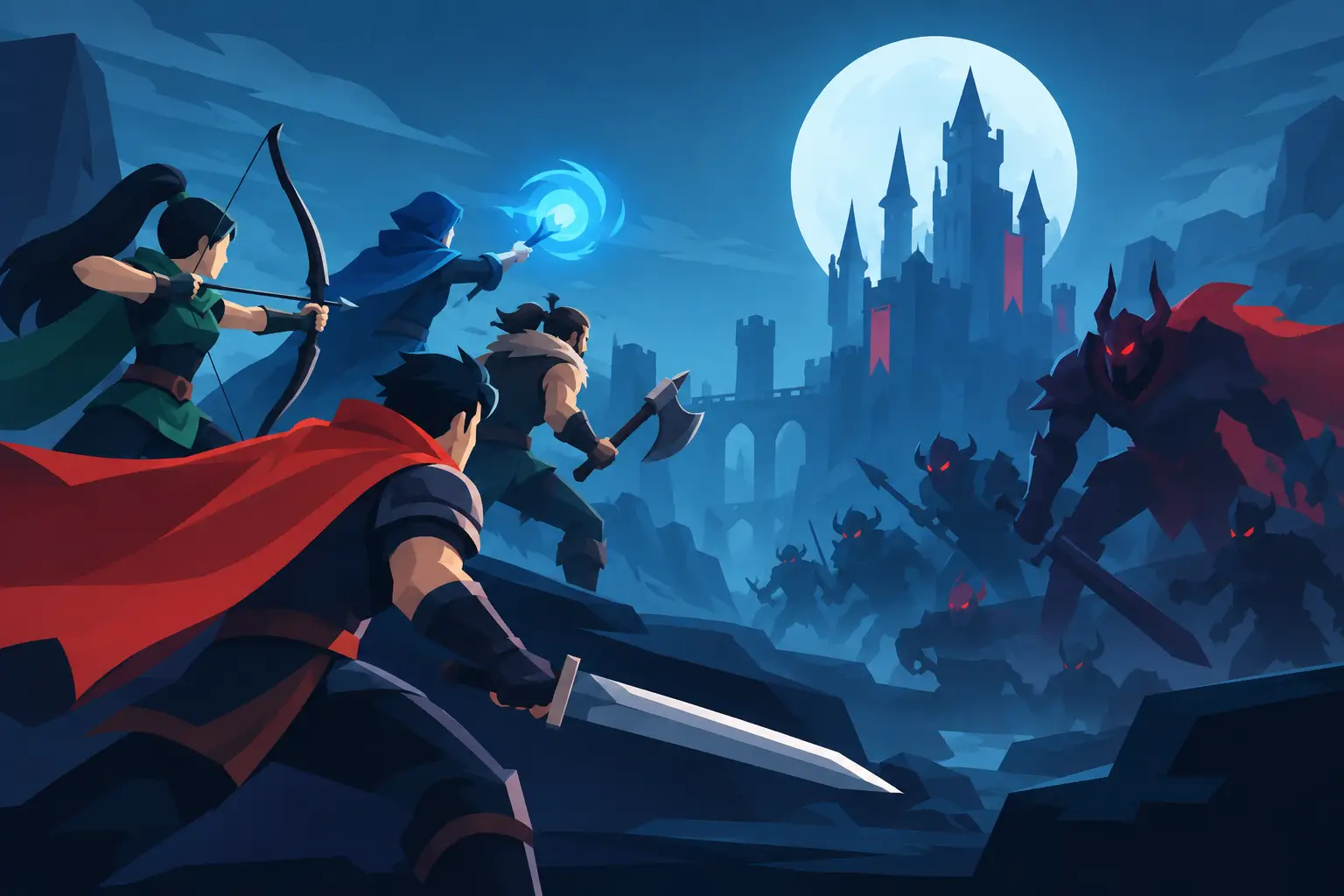
A strong collection can carry you through early encounters, but the arena exposes every weak bond in your formation. Learning how to join multiplayer battles is not only about entering a queue. It is about sending a Warlord and a chosen circle of Familiars into a real-time contest where positioning, growth, and preparation are judged by another player’s strategy.
In Blood Legends, combat resolves automatically once the battle begins. Your decisions happen before the first strike: which Familiars you bring, where they stand, what skills they have awakened, and whether your formation can endure the enemy’s opening assault. Multiplayer rewards the Warlord who plans for the battle that is coming, not the one who reacts too late.
How to Join Multiplayer Battles
Begin by progressing through the early game until the multiplayer area becomes available in your current build or season. Story battles, growth systems, and introductory objectives are designed to give a new Warlord a functional roster before they face other players. If multiplayer is not yet visible, continue advancing through the available content, strengthen your core team, and check any feature requirements shown in-game.
Once the mode is open, enter the multiplayer or battle menu from the main game interface. Choose the available competitive mode, review the entry screen, and confirm the formation you intend to send. Depending on the mode, you may face a live opponent, be matched against a rival team, or enter an event-specific battle with its own rules and rewards.
Before you confirm, pause at the formation screen. This is the last quiet moment before the field turns hostile. Make sure your selected Warlord, Familiars, equipment, and placements reflect the opponent or mode you are entering. Then begin matchmaking or accept the challenge when the option appears.
The path is simple: unlock the mode, enter the multiplayer menu, choose your battle type, set your formation, and confirm the fight. The work behind those steps is where rank is earned.
Build a Formation Before You Queue
Multiplayer is rarely the place to test a team that has not survived your own PvE content. A Familiar may look powerful from its rarity or level alone, yet still fail when placed beside allies that do not support its skills. Start with a focused group rather than spreading resources across every Familiar you collect.
Your front line should be able to absorb pressure long enough for the rest of the formation to act. Durable Familiars, defensive effects, healing, shielding, or control can create the time your damage dealers need. Behind them, place the units whose value depends on surviving the opening moments, such as fragile attackers, support Familiars, or characters with delayed abilities.
Positioning matters because automated combat follows the conditions you establish. A powerful back-line Familiar placed where it takes early damage may never reach the point where its skill changes the fight. A defensive unit placed too far from the enemy may leave weaker allies exposed. There is no universal formation that defeats every opponent. Your roster, skill levels, and the enemy’s setup all change the answer.
Equip the team you actually intend to use in multiplayer. Review equipment bonuses, empowered stats, evolutions, and Blood Bond skill unlocks before entering. Small advantages become visible when both sides have invested in their teams. A missing piece of gear or an unspent upgrade can be the difference between surviving an enemy burst and watching the formation collapse.
Read the Enemy’s Formation
When multiplayer provides a preview of the opposing force, treat it as intelligence, not decoration. Look first at the enemy’s front line. If it is built to endure, a formation that relies on one short burst of damage may run out of momentum. If the opponent appears fragile but dangerous, your priority may be surviving the first exchange rather than matching their aggression.
Then look for patterns. Several high-damage Familiars protected by a single defender suggest a vulnerable back line, but only if your own team can reach it. A formation packed with sustain and defensive effects may be difficult to defeat quickly, which can make control, sustained damage, or stronger long-term scaling more valuable.
Do not change your entire roster after every loss. One defeat may come from a level gap, an unfavorable matchup, or a single ability triggering at the wrong moment. Repeated losses against the same kind of formation are more useful. They reveal what your team lacks: protection, damage, speed, control, healing reduction, or a more coherent placement strategy.
What Happens Once the Battle Begins
After matchmaking confirms the encounter, combat unfolds automatically. Your Warlord and Familiars act according to their stats, skills, buffs, debuffs, equipment, and position in the formation. There is no need to tap through every attack. Watch the battle closely instead.
Pay attention to the first Familiar defeated, the enemy ability that swings momentum, and whether your own damage dealers survive long enough to contribute. These details tell you far more than a win or loss screen alone. If your front line vanishes immediately, invest in survival or reconsider placement. If the enemy’s back line remains untouched while your team falls apart, your formation may lack the tools to pressure protected threats.
A victory also deserves inspection. You may have won because your strategy was sound, or because the opponent’s team was underdeveloped. The distinction matters as you climb. A formation that defeats early rivals without effort may still break against a Warlord with evolved Familiars, refined equipment, and stronger Blood Bonds.
Fight for Progress, Not Just a Single Win
Multiplayer battles are part of long-term progression. Rankings, seasonal goals, event rewards, and competitive milestones can make each attempt meaningful, but chasing every fight with an unprepared team can waste time and resources. Enter when your formation has a purpose.
Use early matches to establish a baseline. If you are winning consistently, test a stronger bracket or a more specialized formation. If you are losing, return to the parts of the game that deepen your roster: level key Familiars, evolve those with lasting value, improve equipment, unlock skills, and capture or summon options that fill a genuine weakness.
Avoid rebuilding your entire team around one powerful enemy you faced once. Hero-collector RPGs reward flexibility, but they also reward commitment. Build a reliable core first, then develop alternative Familiars for matchups your core cannot answer. A single defensive specialist or control-focused Familiar can become valuable when the field shifts.
Prepare for Events and Raid Battles Differently
Not every multiplayer encounter asks for the same formation. Ranked fights often favor teams built to defeat another player’s roster, while raid battles may reward sustained damage, survival over many turns, or specific responses to a boss mechanic. Event rules can also change what is effective.
Read the battle conditions before committing resources. A Familiar that dominates against a rival Warlord may be less useful against a raid threat with different defenses and attack patterns. Keeping a few developed alternatives protects your progress when the Gates open and the rules change.
When You Cannot Join a Match
If matchmaking will not begin, first check whether the mode is currently open and whether you meet any displayed entry conditions. Some battles may be tied to schedules, ranks, seasons, event windows, or progression requirements. Verify your connection as well, since real-time multiplayer depends on a stable mobile connection.
If the game allows you to enter but your team is not eligible, inspect your formation for missing units, mode restrictions, or changes that occurred after you last saved the team. Re-select the formation, confirm its members and equipment, then try again. When a problem persists, use the game’s support options with details about the mode, timing, and any message shown on screen.
The arena is not a separate world from the rest of your journey. Every Familiar you evolve, every skill you awaken, and every formation you refine becomes part of the force you bring before another Warlord. Enter the next battle with a plan, watch what the darkness reveals, and let each defeat teach your army how to endure.