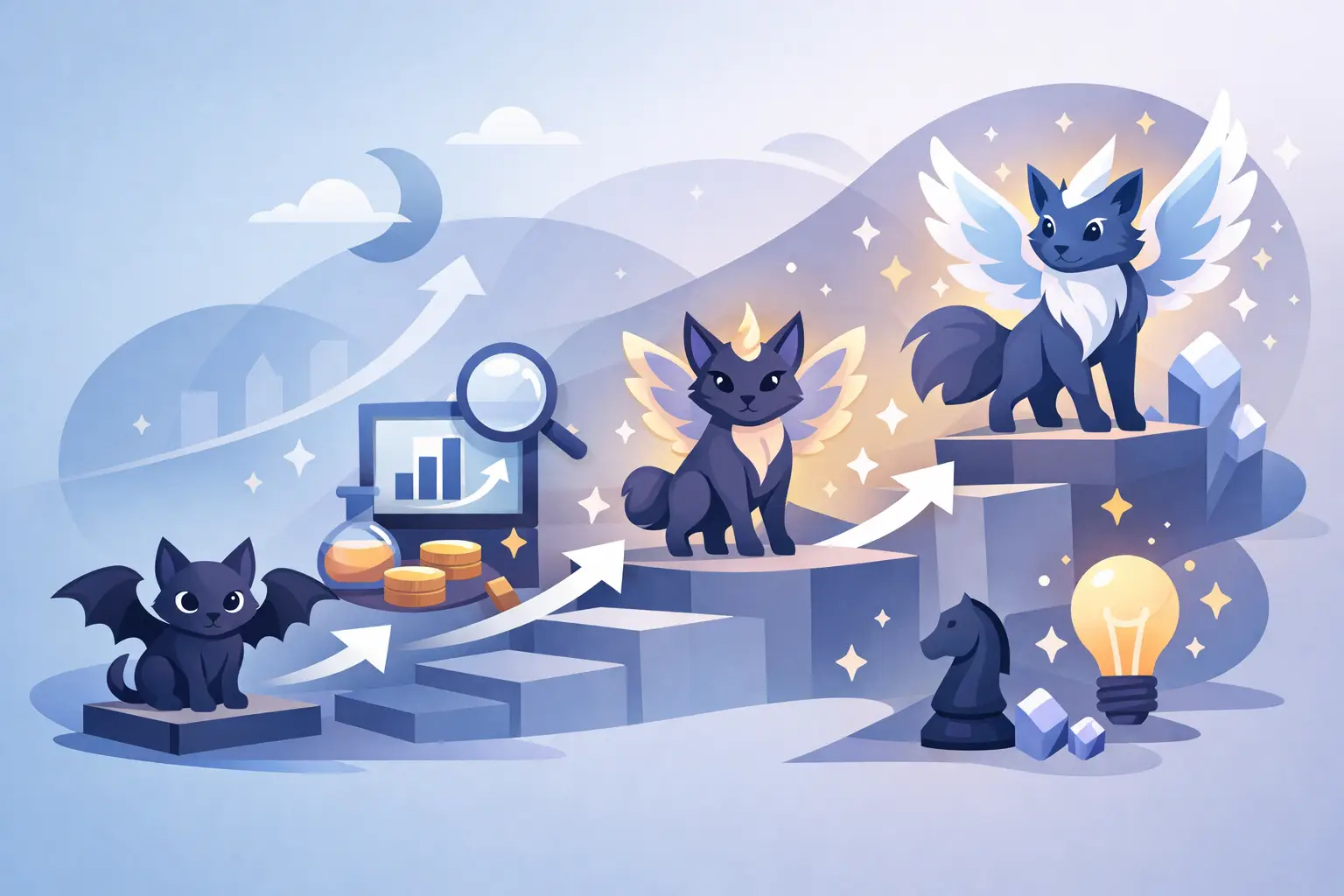
A Familiar at the edge of evolution is more than a stronger collector piece. It is a weapon waiting to take its true shape. If you want to know how to evolve Familiars quickly, the answer is not to scatter every reward across your entire roster. Choose a purpose, feed that purpose relentlessly, and let your formation decide which Contract earns the next ascent.
Evolution is one of the clearest ways to turn steady mobile progress into real battlefield pressure. A properly evolved Familiar can survive long enough for its skills to matter, support a Warlord’s plan, or become the damage source that breaks an enemy line in automated combat. But rushing the wrong Familiar can leave your resources buried in a unit that no longer fits your team.
Start With the Formation, Not the Collection
The fastest path is rarely the broadest one. Blood Legends invites you to capture, summon, and collect many Familiars, and every new arrival may look worthy of immediate investment. Resist that impulse until you know what your current formation needs.
Look at the team you use most often in story locations, progression battles, raids, or multiplayer. Are your front-line Familiars collapsing before your back line can act? Is your damage arriving too slowly? Are enemies resisting your main plan because you lack the right buffs, debuffs, or control? The Familiar you evolve should solve a problem you are already facing.
Build around a small core first. For most players, that means committing resources to the Familiars that appear in their primary formation rather than trying to raise every interesting recruit at once. A narrow focus makes each upgrade felt immediately, while a wide focus creates a roster full of half-finished potential.
There is one exception: keep a few alternatives in reserve when a specific location, event, or opponent punishes your main composition. Flexibility matters, but it should not become an excuse to divide your evolution materials among ten different projects.
Know What Evolution Demands Before You Spend
Before leveling a Familiar with the expectation of evolving it soon, inspect its evolution requirements. The exact path may involve level thresholds, specific materials, duplicate units, or other progression conditions. Whatever the requirement screen asks for, treat it as the map for your next sessions.
This changes how you play. Instead of claiming rewards without a plan, you can identify which battles, event objectives, summons, captures, or recurring activities move your chosen Familiar closer to evolution. Every reward that does not serve that goal can be saved for later rather than consumed out of habit.
Do not assume that a high-rarity Familiar is automatically the correct first evolution target. Rarity can signal potential, but your current needs still matter. A Familiar that works with your Warlord, fits your formation, and receives useful support may improve your results sooner than a more glamorous unit that has no place in your team.
A simple question prevents many costly mistakes: will evolving this Familiar help me clear content that gives me more progression resources? If the answer is yes, it is usually a strong investment. If the answer is only that the Familiar looks impressive in the collection, wait until your core is secure.
How to Evolve Familiars Quickly Through Focused Play
Quick evolution comes from converting daily play into one clear objective. Log in knowing which Familiar you are advancing and why. Then direct your available energy, attempts, and rewards toward that goal before spending time on lower-priority activities.
Prioritize content that does at least one of two things: it supplies an evolution requirement, or it makes your chosen Familiar stronger enough to reach that requirement. Story progression can open better rewards and tougher encounters. Repeatable battles can provide the experience and materials needed for growth. Events may offer valuable progression opportunities, particularly when their rewards match your active roster.
The key is to avoid spending every resource the moment you receive it. Save materials when you are close to a meaningful threshold, especially if the next evolution will change the strength of your formation. Holding resources briefly is not wasted progress. It is preparation for a decisive jump.
When an event appears, compare its rewards with your current plan. Some events will be worth shifting your focus for because they accelerate a Familiar you already intend to evolve. Others may offer tempting rewards that do not serve your team at all. Play them if they are enjoyable, but do not let every limited activity derail your main progression path.
Make Daily Rewards Serve One Contract
Small rewards become powerful when they are not diluted. Experience items, evolution materials, currency, equipment upgrades, and duplicate opportunities all have greater value when they are feeding the same battle-ready Familiar or formation.
A useful daily rhythm is to clear time-limited objectives first, spend energy on the content tied to your active evolution target, and then use remaining time on story progress or experimentation. This order protects the rewards that disappear at reset while keeping your long-term goal intact.
If you are unable to meet every requirement immediately, do not burn premium resources simply to force an evolution a few hours earlier. The trade-off depends on what you would be giving up. Spending may be justified before a difficult raid, a competitive push, or the final stage of an event. Outside those moments, patient accumulation is often the stronger move.
Leveling and Evolution Must Move Together
Evolution is not a replacement for leveling, equipment, skills, or formation strategy. A newly evolved Familiar still needs the surrounding support to fulfill its role. Treat evolution as part of a progression chain, not the entire chain.
Keep your chosen Familiar near the level ceiling required for its next evolution stage. If it falls behind, your materials may be ready while the Familiar itself is not. At the same time, avoid overfeeding low-priority units simply because they are available. Resources spent on a temporary experiment can delay the Familiar that actually carries your team.
Blood Bond skills and equipment deserve attention alongside evolution. A Familiar built for damage may need offensive stats and a team that creates openings. A defender may need durability, positioning, and allies that benefit from the time it buys. Automated combat does not remove strategy. It makes preparation more important, because your formation must execute without rescue from manual inputs.
After each major upgrade, test the Familiar in content that previously gave you trouble. Watch where the fight fails. If the evolved Familiar is still not performing, the answer may be equipment, position, ally synergy, or enemy mechanics rather than another immediate resource dump.
Avoid the Traps That Slow Your Progress
The first trap is evolving solely for collection value. A deep collection is part of the pleasure of a hero-collector RPG, but early and mid-game strength comes from a reliable formation. Let the collection grow around your core, not ahead of it.
The second trap is treating duplicate Familiars as disposable without checking future needs. If duplicates or other units are part of evolution requirements, spending them casually can create a painful delay later. Review your intended evolution path before using valuable copies for another purpose.
The third trap is chasing every new summon. New Familiars can alter your plans, especially if one has clear synergy with your Warlord or fills a missing role. Still, a new arrival should earn your resources. Compare it against the Familiar already receiving investment rather than resetting your entire strategy at every summon.
Finally, do not judge a Familiar in isolation. A unit can look weak when placed in the wrong row, paired with unsuitable allies, or sent against an enemy formation designed to counter it. Before abandoning an evolution project, test reasonable formation changes and examine the fight as a whole.
Let Hard Content Set Your Next Evolution Goal
The best evolution target is often revealed by defeat. A raid boss that overwhelms your front line, a story encounter that survives your opening damage, or a multiplayer opponent whose formation controls your team can show exactly where your strength is missing.
Use those losses as information. If your damage dealer cannot survive long enough to act, evolve or strengthen the protector that anchors the team. If your team endures but cannot finish the fight, invest in the Familiar that converts time into pressure. If control and debuffs are deciding the battle, prioritize the Familiar whose skills create that advantage.
Each evolution should make the next wall feel less absolute. That is the rhythm of a Warlord’s rise: not feeding power into every shadow that answers the call, but choosing the Contract that will carry the formation through the next gate. Keep one clear target, protect the resources it needs, and let every hard-won battle tell you what must evolve next.